
Industry insights
Compostable Courier Bags: A Sustainable Packaging Option for E-Commerce Businesses
The rapid growth of e-commerce has changed the way products are packed, shipped, and delivered. From clothing and cosmetics to documents, accessories, and small consumer products, millions of packages move through courier networks every day. With this growth comes a growing need for packaging that is practical, lightweight, and more environmentally responsible.
Compostable courier bags are emerging as an alternative for businesses looking to reduce their dependence on conventional plastic mailers while maintaining the convenience required for online order fulfilment.
What Are Compostable Courier Bags?
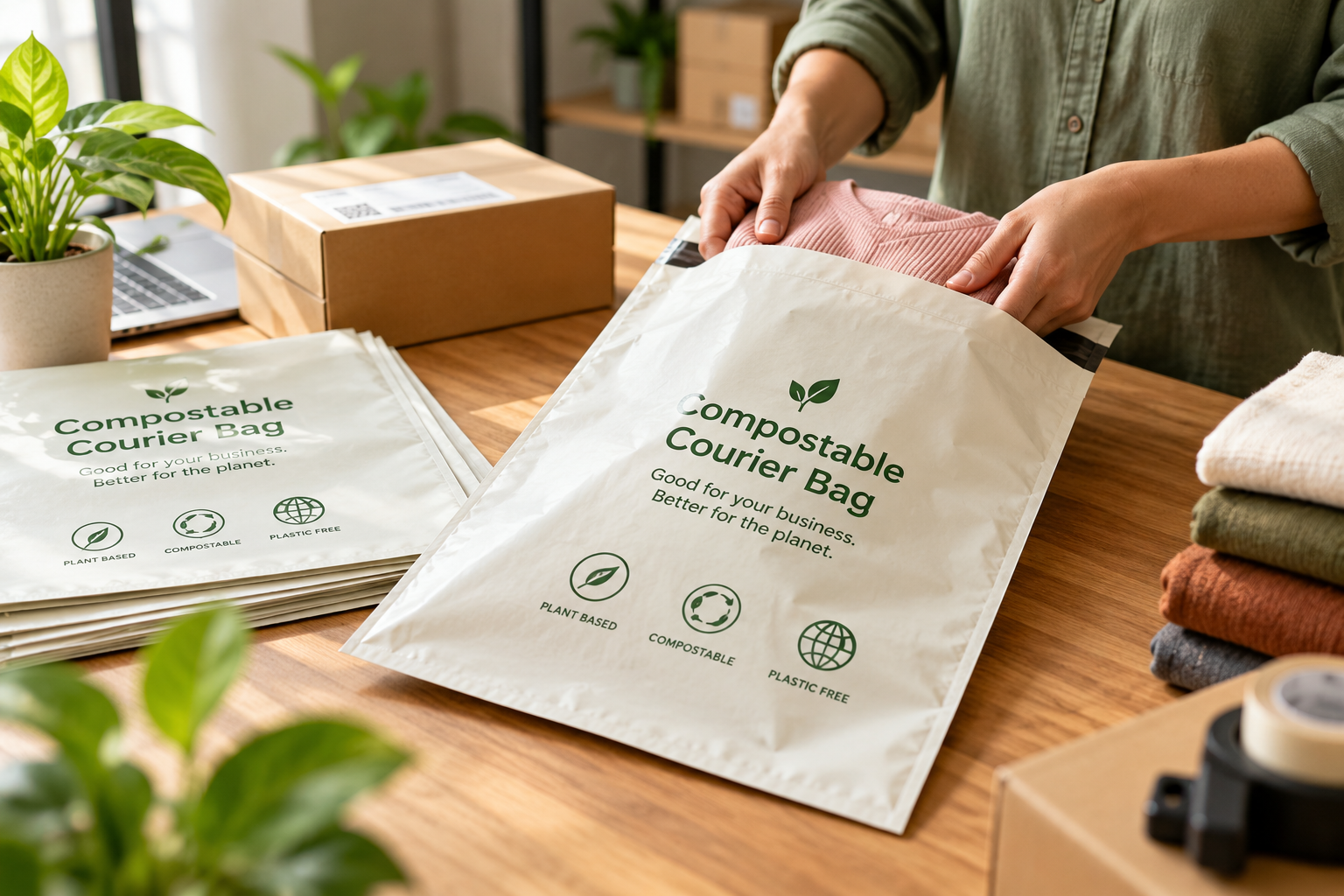
Compostable courier bags are shipping bags manufactured using compostable materials designed to break down under appropriate composting conditions. They are developed for businesses that require lightweight outer packaging for transporting products.
Like conventional courier bags, compostable mailers can be designed with features such as self-sealing closures, flexible construction, printing, and customized dimensions. The exact specifications depend on the product being shipped and the requirements of the business.
For e-commerce brands, the goal is not simply to replace one bag with another. The packaging should continue to provide the necessary protection and functionality while offering a different approach to material selection.
Why Are Courier Bags Important for E-Commerce?
Packaging is an essential part of every online order. Before reaching the customer, a product may pass through warehouses, sorting facilities, delivery vehicles, and multiple handling points.
A courier bag therefore needs to be lightweight but sufficiently durable for its intended application. It should also be easy to store, pack, seal, label, and transport.
For businesses shipping hundreds or thousands of orders every month, even a small change in packaging material can become significant across their overall packaging operation.
How Can Compostable Mailers Support Sustainable E-Commerce?
Traditional plastic mailers are widely used because they are inexpensive, lightweight, and convenient. However, their environmental persistence has encouraged businesses to explore alternative materials.
Compostable mailer bags provide another option for brands developing sustainable packaging strategies. When appropriately certified and processed under the conditions specified for the product, compostable materials are designed to break down rather than persist like conventional plastic.
This makes them particularly interesting for brands that are actively evaluating the environmental impact of their shipping materials.
Applications of Compostable Courier Bags
Compostable courier bags can be considered for various e-commerce and business applications, including:
- Clothing and apparel shipments
- Fashion accessories
- Small retail products
- Personal-care products
- D2C brand orders
- Online marketplace shipments
- Subscription-box packaging
- Promotional and corporate shipments
- Document and lightweight product delivery
The appropriate specification depends on the product size, weight, transportation conditions, and required level of protection.
Customization for Growing Brands
Packaging is also an important branding opportunity for online businesses. A plain shipping bag may protect a product, but customized packaging can create a more recognizable delivery experience.
Businesses can explore customized compostable courier bags with suitable dimensions, branding, printing, closure mechanisms, and material specifications.
For growing D2C brands, this can help combine packaging functionality with visual brand identity without treating sustainability and branding as separate considerations.
What Should Businesses Check Before Choosing Compostable Mailers?
Not every compostable bag is suitable for every shipping application. Before selecting a product, businesses should evaluate several factors.
First, consider the size and weight of the products being shipped. The bag must have suitable strength and dimensions for the intended application.
Second, check the product’s relevant certifications and compostability claims. Businesses should understand the conditions required for the material to compost and communicate disposal instructions appropriately.
Third, evaluate storage and transportation requirements. Packaging may experience temperature changes, moisture, friction, and repeated handling during delivery.
Finally, businesses should work with a manufacturer that can provide specifications and customization based on the intended application.
Why Sustainable Shipping Packaging Matters
The shift toward sustainable e-commerce is not limited to the product itself. Customers encounter packaging every time they receive an online order, making shipping materials an important part of the overall brand experience.
For businesses, moving toward eco-friendly courier bags can become one component of a wider sustainability strategy that includes responsible sourcing, efficient packaging design, reduced material usage, and appropriate waste management.
The objective should be to select packaging based on real product requirements rather than adopting sustainability claims without considering performance and end-of-life conditions.
BioMeta PolyPack for Compostable Packaging Solutions
BioMeta PolyPack develops compostable packaging solutions for businesses across different applications. Its focus on compostable films and customized packaging solutions allows businesses to explore alternatives according to their specific operational and product requirements.
For e-commerce brands considering a transition from conventional plastic mailers, discussing product specifications, application requirements, customization, and appropriate compostability standards with a packaging manufacturer is an important starting point.
Conclusion
Compostable courier bags can provide e-commerce and D2C businesses with an alternative approach to conventional plastic shipping mailers. Their lightweight format, customization potential, and compostable material design make them relevant for brands exploring more sustainable packaging strategies.
