Industry insights
Compostable Mulch Film: A Sustainable Solution for Modern Agriculture
Modern agriculture is increasingly focused on improving crop productivity while reducing its environmental impact. One solution gaining attention is compostable mulch film, an alternative to conventional plastic mulch used in farming and horticulture. Designed to support crop growth while reducing long-term plastic waste, compostable agricultural films can help farmers move toward more sustainable cultivation practices.
What Is Compostable Mulch Film?
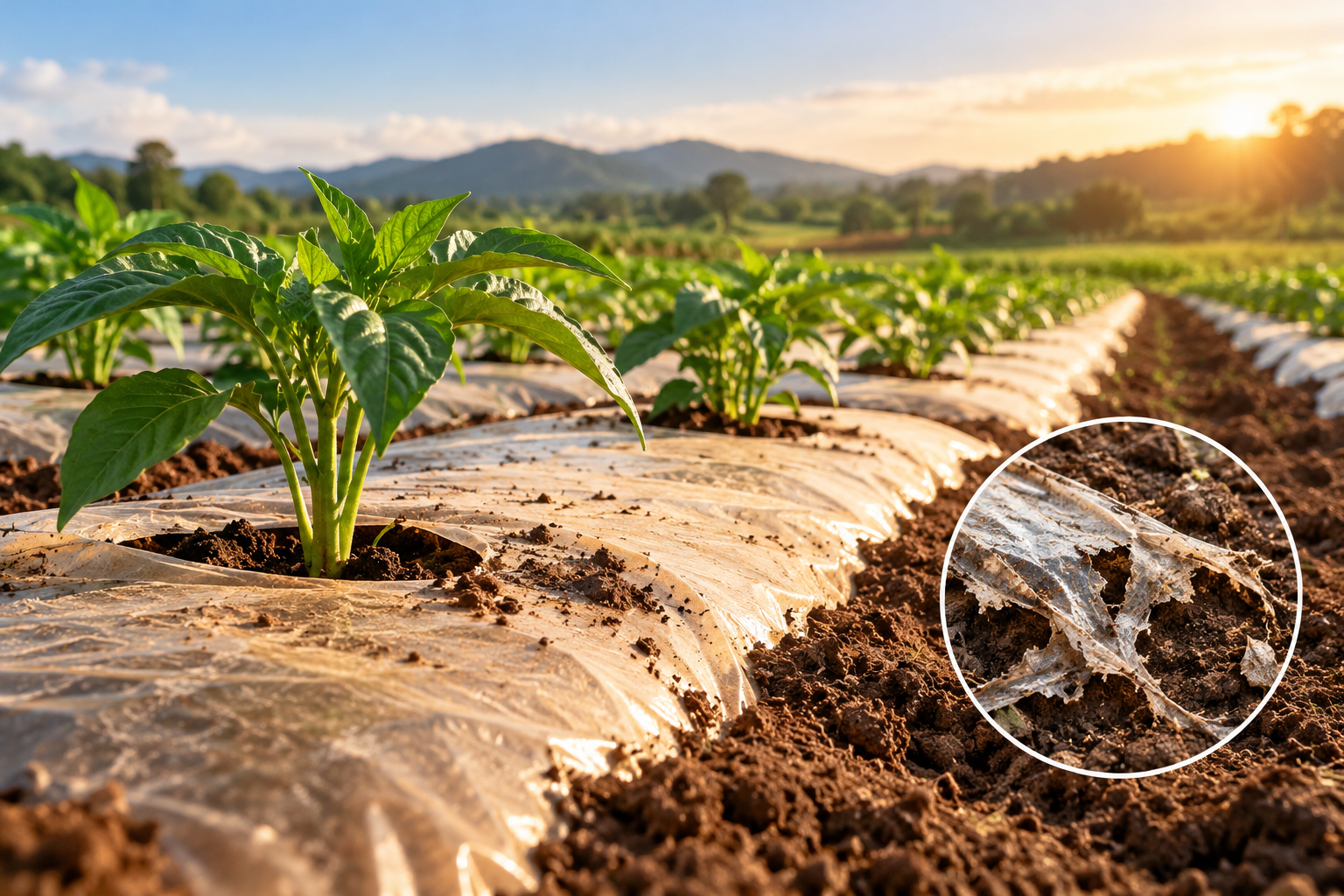
Compostable mulch film is a specialized agricultural film placed over the soil around growing crops. Like conventional mulch films, it can help regulate soil conditions and provide a protective layer around plants. The key difference is that compostable mulch film is designed to break down under suitable composting conditions instead of remaining as persistent plastic waste.
BioMeta PolyPack offers UV-stabilized compostable mulch films in options such as black, silver, and natural finishes, with customization available for agricultural requirements.
How Does Agricultural Mulch Film Help Farmers?
Mulching is used for several practical reasons in agriculture. A suitable mulch film can help manage the growing environment around plant roots by supporting soil temperature and moisture retention.
During cultivation, maintaining adequate moisture can be particularly important for crop development. A mulch layer can reduce direct evaporation from the soil surface, helping farmers manage irrigation more efficiently. It can also provide a physical barrier between the soil and the surrounding environment.
Depending on the crop, climate, and farming method, mulch films may also help create more consistent soil conditions around plants.
Reducing Plastic Waste in Agriculture
Traditional plastic mulch films can create disposal challenges after a growing cycle. Removing, collecting, transporting, and disposing of used agricultural plastic requires additional effort and can contribute to agricultural waste.
This is where compostable agricultural film offers an alternative approach. Instead of relying on conventional plastic materials that can persist in the environment, compostable films are designed with end-of-life considerations in mind.
For farms, nurseries, landscaping operations, and agricultural businesses looking to reduce their dependence on conventional plastics, compostable mulch film can become part of a broader sustainable farming strategy.
Benefits of Compostable Mulch Film
Using compostable mulch film can provide several potential benefits:
- Helps retain soil moisture
- Supports soil temperature management
- Provides a protective layer around crops
- Reduces dependence on conventional plastic mulch
- Supports environmentally responsible farming practices
- Can be customized for different agricultural requirements
- Helps businesses align packaging and agricultural practices with sustainability goals
The performance of any mulch film depends on crop type, soil conditions, climate, installation, and other farming practices, so selecting the appropriate specification is important.
Why Choose Compostable Agricultural Film?
Sustainable agriculture is not simply about increasing production. It is also about considering the materials used throughout the farming process. From packaging and nursery products to agricultural films, businesses are increasingly looking for alternatives that combine functionality with environmental responsibility.
BioMeta PolyPack manufactures compostable solutions for multiple industries and provides customized products according to application requirements. Its compostable product portfolio includes agricultural, retail, food-service, industrial, and specialty film solutions.
Building a More Sustainable Agricultural Future
As agriculture continues to evolve, material choices will become increasingly important. Compostable mulch film provides farmers and agricultural businesses with an option to support crop management while addressing concerns associated with conventional plastic waste.
Choosing the right agricultural film should always involve considering crop requirements, local conditions, film specifications, and appropriate disposal or composting practices.
With responsible material selection and better agricultural practices, compostable solutions can contribute to a cleaner and more sustainable farming ecosystem.
For businesses exploring eco-friendly agriculture and compostable agricultural film, BioMeta PolyPack offers customized compostable film solutions designed for modern applications.
Conclusion
As the demand for eco-friendly agriculture, biodegradable mulch film, and sustainable farming solutions continues to grow, compostable agricultural films can play an important role in reducing plastic waste across the farming sector. Selecting the right film according to crop requirements, climate, soil conditions, and end-of-life practices is essential for achieving the intended benefits.
