Industry insights
Compostable Packaging for Food & Retail Businesses: A Practical Guide
The way businesses package products is changing. Customers today are paying closer attention not only to what they buy but also to how those products are packaged. For retailers, restaurants, grocery stores, food delivery companies, and e-commerce businesses, sustainable packaging has become an important part of building a responsible brand.
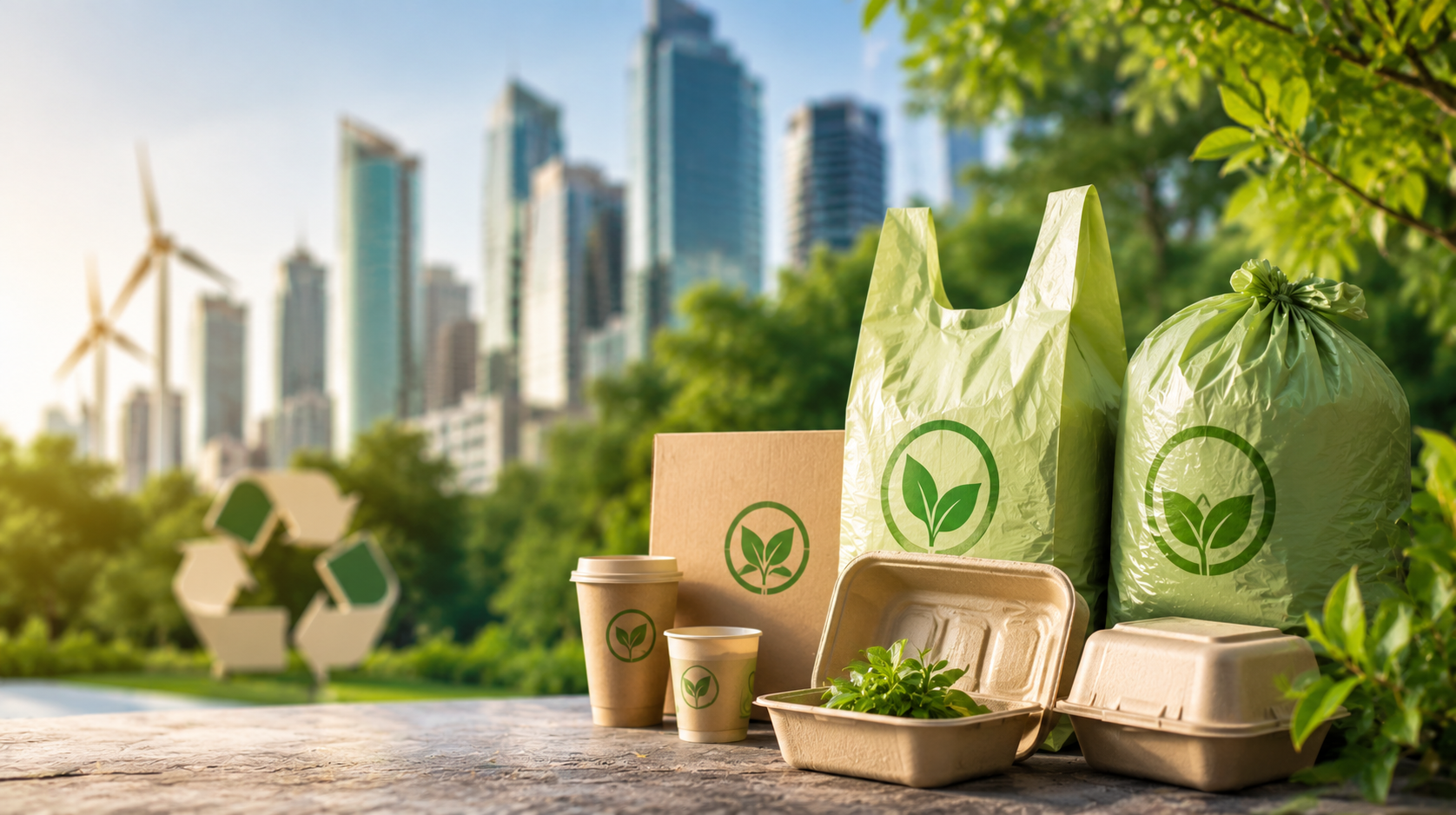
Biometa Polypack provides 100% compostable bags and films designed for applications across retail, food service, healthcare, agriculture, and other industries. Its product range includes compostable grocery bags, custom shopping bags, produce bags, bread bags, garbage bags, hot liquid bags, and other specialized packaging solutions.
What Is Compostable Packaging?
Compostable packaging is designed to break down under appropriate composting conditions into natural components such as water, carbon dioxide, and organic matter. Unlike conventional plastic, the objective is to return the material to the natural cycle rather than leaving persistent plastic waste behind.
Compostable materials can be manufactured using plant-based and bio-polymer materials. Biometa states that its compostable bags and films use renewable raw materials including cornstarch, PLA, and PBAT.
Why Food Businesses Are Switching to Compostable Packaging
Food businesses have a particularly important relationship with packaging. Fruits, vegetables, bakery products, snacks, takeaway food, and beverages all require packaging that provides protection and convenience.
Compostable Packaging for Retail Stores
Retail businesses use packaging every day. From grocery shopping bags to customized carry bags, packaging becomes an important part of the customer’s experience.
Compostable custom shopping bags can provide retailers with an opportunity to combine functionality, branding, and sustainability. Biometa offers customizable options including bag dimensions, GSM, colours, embossing, and printing, allowing businesses to maintain their visual identity while adopting compostable packaging.
For a retail brand, a branded compostable bag can communicate a simple message: sustainability is part of the company’s business approach.
Benefits Beyond Sustainability
One of the biggest advantages of compostable packaging is that businesses can look at sustainability from more than an environmental perspective.
First, it can help businesses reduce their reliance on conventional plastic packaging. Second, certified compostable products can support compliance requirements where applicable. Third, sustainable packaging can strengthen a company’s brand image among customers who consider environmental responsibility when making purchasing decisions.
Biometa highlights benefits including reduced pollution, lower carbon footprint, alignment with ESG goals, and support for businesses transitioning away from conventional single-use plastics.
Choosing the Right Compostable Packaging
Not every packaging application has the same requirements. Before selecting a product, businesses should consider the type of product being packed, required strength, dimensions, thickness, printing requirements, moisture exposure, temperature, storage conditions, and disposal process.
For example, a grocery retailer may require strong carry bags, while a fruit and vegetable supplier may need food-grade produce bags. A bakery may need transparent bread bags, whereas a restaurant or food-service business may require packaging suitable for hot liquids. August
Why Choose Biometa Polypack?
Sustainability claims should always be evaluated carefully. Businesses should look for appropriate certification and documentation when purchasing compostable packaging.
Biometa Polypack states that it is a CPCB-approved manufacturer of compostable bags and films and provides compliance documentation, including CPCB test reports and certificates.
For businesses purchasing packaging at scale, working with a manufacturer that can provide relevant documentation can make the transition more reliable and transparent.
Conclusion
Compostable packaging is becoming an increasingly relevant option for modern food and retail businesses. From grocery bags and produce bags to bread packaging and customized shopping bags, businesses now have multiple opportunities to reduce their dependence on conventional plastic.
