
Industry insights
How Compostable Bags Reduce Carbon Footprint and Plastic Waste
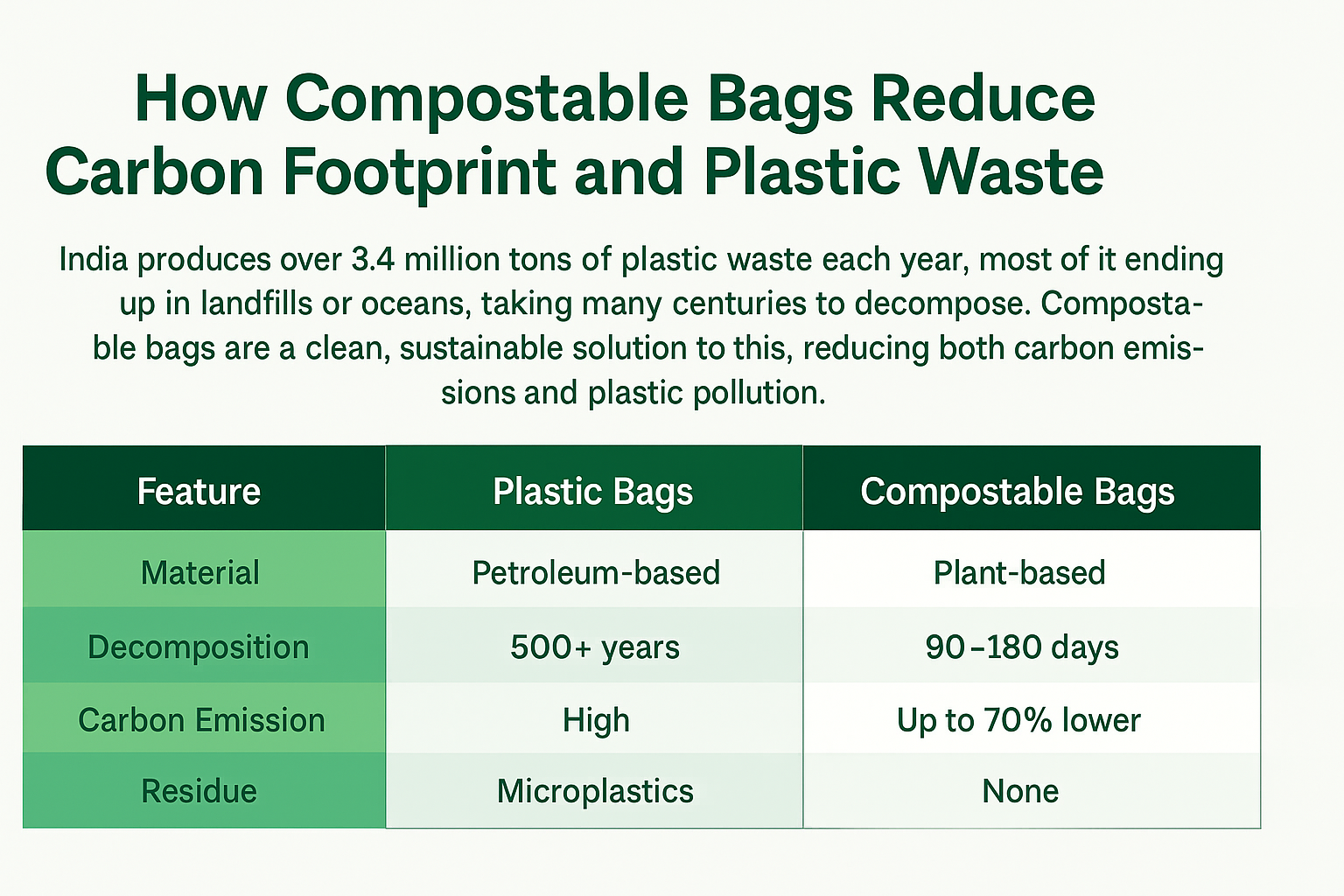
India produces over 3.4 million tons of plastic waste each year, most of it ending up in landfills or oceans, taking many centuries to decompose. Compostable bags are a clean, sustainable solution to this, reducing both carbon emissions and plastic pollution.
What Makes Compostable Bags Different?
Made from renewable, plant-based materials like corn starch, PLA, and PBAT, compostable bags can naturally decompose within 90–180 days and leave no toxins or microplastics behind.
At Biometa Polypack, every product is CPCB-approved and compliant with India’s Plastic Waste Management Rules (2016, amended 2022) — ensuring genuine, certified compostable packaging.
Eco Impact: Compostable vs. Plastic
| Feature | Plastic Bags | Compostable Bags |
|---|---|---|
| Material | Petroleum-based | Plant-based |
| Decomposition | 500+ years | 90–180 days |
| Carbon Emission | High | Up to 70% lower |
| Residue | Microplastics | None |
Compostable bags reduce the carbon footprint by as much as 70%, encourage composting, and contribute to the circular economy of India by turning waste into organic fertilizer.
Why Choose Biometa Polypack?
Our product range includes 100% compostable carry bags, garbage bags, bread bags, nursery bags, and specialty films that are all tested for their durability, strength, and compostability.
Compostable packaging is not only eco-friendly, but it’s smart, sustainable, and future-ready.
Together, Let’s Make Packaging Part of the Solution
Choose Biometa Polypack — and join India’s move toward a plastic-free, low-carbon future.
