Industry insights
How Compostable Industrial Films Are Changing Sustainable Packaging in 2026
Sustainability is no longer limited to shopping bags and consumer packaging. Industrial businesses are also looking for ways to reduce plastic waste without compromising product protection, performance, or operational efficiency.
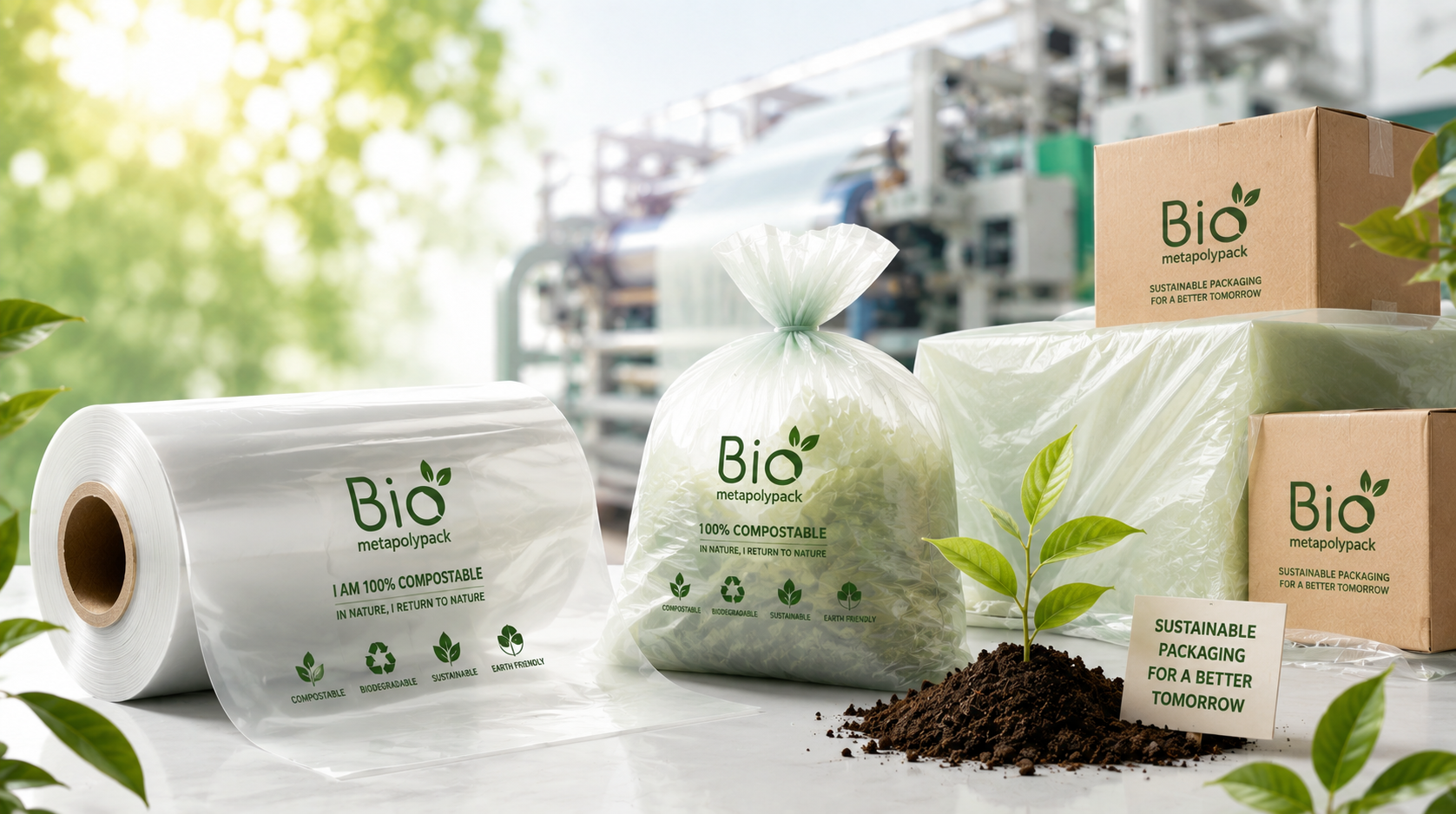
Biometa Polypack manufactures compostable films and bags for a range of industrial applications, including anti-static packaging, VCI films and bags, protective pouches, specialty films, and other customized solutions.
Why Industrial Packaging Needs to Change
Industrial packaging is often designed for demanding environments. Components may need protection from dust, moisture, scratches, static electricity, corrosion, or handling damage.
Traditional plastic films are widely used because they offer flexibility and durability. However, once these materials have completed their packaging function, disposal can become an environmental challenge.
This is why sustainable industrial packaging is becoming increasingly important. Businesses are looking for materials that can provide the necessary level of protection while supporting their environmental goals.
Compostable films offer one potential solution for applications where conventional plastic films can be replaced without compromising the required packaging performance.
Compostable materials can be manufactured using plant-based and bio-polymer materials. Biometa states that its compostable bags and films use renewable raw materials including cornstarch, PLA, and PBAT.
Compostable VCI Films for Metal Components
Metal components can face another major packaging challenge: corrosion. Compostable VCI films and bags provide an alternative approach. Biometa offers compostable VCI films and bags designed to protect metal parts from corrosion while remaining eco-friendly and compostable.
This can be particularly relevant for industries handling automotive components, engineering parts, machinery components, and other metal products.
Protective Pouches and Covers for Industrial Products
Industrial packaging does not always require a large bag or roll of film. Smaller protective pouches, sleeves, and covers can be used to protect individual products from dust, moisture, and scratches.
Biometa’s compostable pouches and covers are designed for applications involving appliances, accessories, cosmetics, personal hygiene products, retail packaging, and FMCG products.
For manufacturers and OEMs, customized protective packaging can also provide a more professional presentation while protecting products during storage and transportation.
Customization Is Important for Industrial Packaging
Industrial products come in different sizes, shapes, weights, and handling conditions. A one-size-fits-all approach may not always provide the required protection.
Biometa offers customized compostable solutions with options for specifications such as GSM, width, colour, embossing, and printing. The company also provides bulk manufacturing and supply-chain solutions for B2B customers.
Customized packaging can help businesses select the appropriate material and dimensions for their application while also incorporating branding where required.
The Future of Industrial Packaging
Sustainable packaging is moving beyond consumer-facing applications. Industrial manufacturers, OEMs, logistics companies, electronics businesses, automotive suppliers, and other sectors are increasingly considering the environmental impact of packaging materials.
Compostable industrial films can play a role in this transition by providing specialized solutions for applications where performance and environmental responsibility need to work together.
The future of industrial packaging will likely depend on materials that are not only strong and functional but also designed with end-of-life considerations in mind.
For example, a grocery retailer may require strong carry bags, while a fruit and vegetable supplier may need food-grade produce bags. A bakery may need transparent bread bags, whereas a restaurant or food-service business may require packaging suitable for hot liquids. August
Conclusion
Compostable industrial films and bags represent an important development in sustainable packaging. From anti-static films for electronics to VCI bags for metal components and protective covers for products, businesses have more opportunities to reduce conventional plastic use across their operations.
