Industry insights
What is the real difference between compostable, biodegradable, and oxo-degradable?
People and businesses that care about the environment need to pick the right eco-friendly packaging. People often use the words compostable, biodegradable, and oxo-degradable to mean the same thing, which can be hard to understand. You need to know what the real differences are in order to make smart choices that really help the environment.
What does it mean for packaging to be "compostable"?
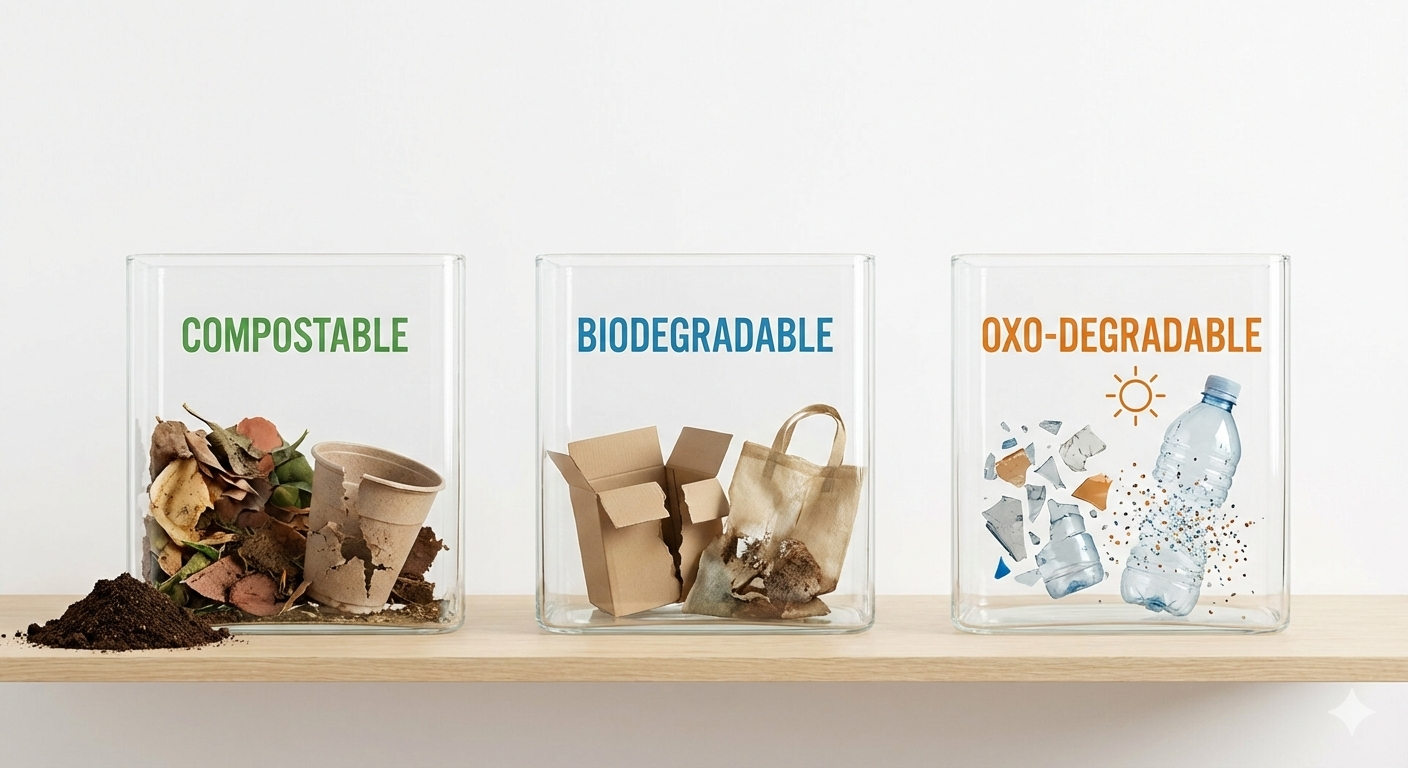
Compostable packaging is a type of biodegradable material, but it does more than that. These things will completely break down into organic, non-toxic parts in a certain amount of time when they are put in compost. Biometa Polypack makes bags that are certified to break down in 90 to 180 days in industrial composting facilities. This leaves behind compost that is full of nutrients and makes the land more fertile. It doesn’t leave behind any harmful chemicals. Check for certification logos to see if the item can be composted.
What is packaging that breaks down on its own?
Microbes can break down biodegradable packaging over time, which is what makes it biodegradable. But this process could take a long time and leave behind microplastics or other trash that isn’t good for the environment. Some biodegradable polymers can only break down a little bit, so they aren’t always the best choice for people who care about the environment.
What is packaging that breaks down in the air?
Oxo-degradable packaging is made of regular plastics with things like cobalt, iron, or nickel added to them. These things break down faster when they come into contact with oxygen and UV light. These plastics break down more quickly, but they don’t break down at the molecular level. Instead, they break down into small pieces of plastic that can stay in the environment for a long time, which is bad for the ecosystem. Environmental experts usually don’t like oxo-degradable products because they can’t be composted.
A Quick Look at the Main Differences Can be put in compost Breaks down in nature Oxo-breakable
Time to break down: 90 to 180 days (with proof) Different, but often years Quick breaking up, but not complete End Item: Compost that is safe to use and organic Could leave behind some residue Microplastics are not good for you.
The certifications are ASTM D6400 and EN 13432. Not always certified No composting certificate
Effects on the environment: Good, it improves the soil. Could mix and contaminate No, it hurts the environment.
Why Should You Use Packaging That Can Be Composted?
Compostable packaging is better for the environment and the law than regular plastics. It makes sure that everything breaks down completely without leaving behind any harmful chemicals. It also helps the circular economy by turning trash into useful compost. Biometa Polypack’s bags and films are 100% biodegradable and made to last. They are also good for the environment. They are great for use in factories, hotels, and stores.
