
Industry insights
Why Compostable Food Packaging Is Becoming Essential for Modern Businesses
Food packaging plays an important role in protecting products, maintaining hygiene, and making transportation easier. However, with increasing awareness about plastic waste, businesses are now looking for packaging solutions that are more environmentally responsible. Restaurants, cafés, bakeries, supermarkets, grocery stores, food manufacturers, and delivery businesses are increasingly considering compostable food packaging as an alternative to conventional plastic.
Compostable packaging offers businesses an opportunity to meet everyday packaging requirements while taking a more sustainable approach. For companies looking to reduce their dependence on traditional plastic, compostable bags and food packaging can be a practical choice.
What Is Compostable Food Packaging?
Compostable food packaging is made from materials designed to break down into natural components under suitable composting conditions. Unlike conventional plastic, which can remain in the environment for a very long period, compostable materials are developed with end-of-life decomposition in mind.
The exact composting process depends on the material, product specifications, and environmental conditions. Therefore, businesses should always check the product’s certifications and disposal requirements before selecting a compostable packaging solution.
Compostable food packaging can be used for various applications, including fresh produce, bakery products, grocery items, and other food-related products.
Why Are Businesses Moving Toward Compostable Packaging?
The demand for sustainable packaging is growing because businesses and consumers are becoming more conscious of packaging waste. Packaging is often one of the first things customers notice when they purchase or receive a product.
For businesses, switching to suitable compostable packaging can support their sustainability goals while maintaining essential packaging functions.
1. Helps Reduce Conventional Plastic Dependence
Traditional plastic packaging is widely used because it is lightweight, flexible, and economical. However, its environmental impact has encouraged businesses to explore alternatives.
Compostable packaging can provide another option for applications where conventional plastic may otherwise be used. By gradually incorporating compostable products, businesses can reduce their reliance on traditional plastic packaging.
2. Supports Sustainable Brand Positioning
Consumers increasingly pay attention to how brands approach environmental responsibility. Sustainable packaging can become part of a company’s overall brand strategy.
For restaurants, grocery stores, bakeries, and food retailers, using compostable packaging can communicate a commitment to more responsible business practices.
3. Suitable for Different Food Applications
Food packaging needs to provide more than sustainability. It must also offer suitable strength, flexibility, protection, and usability.
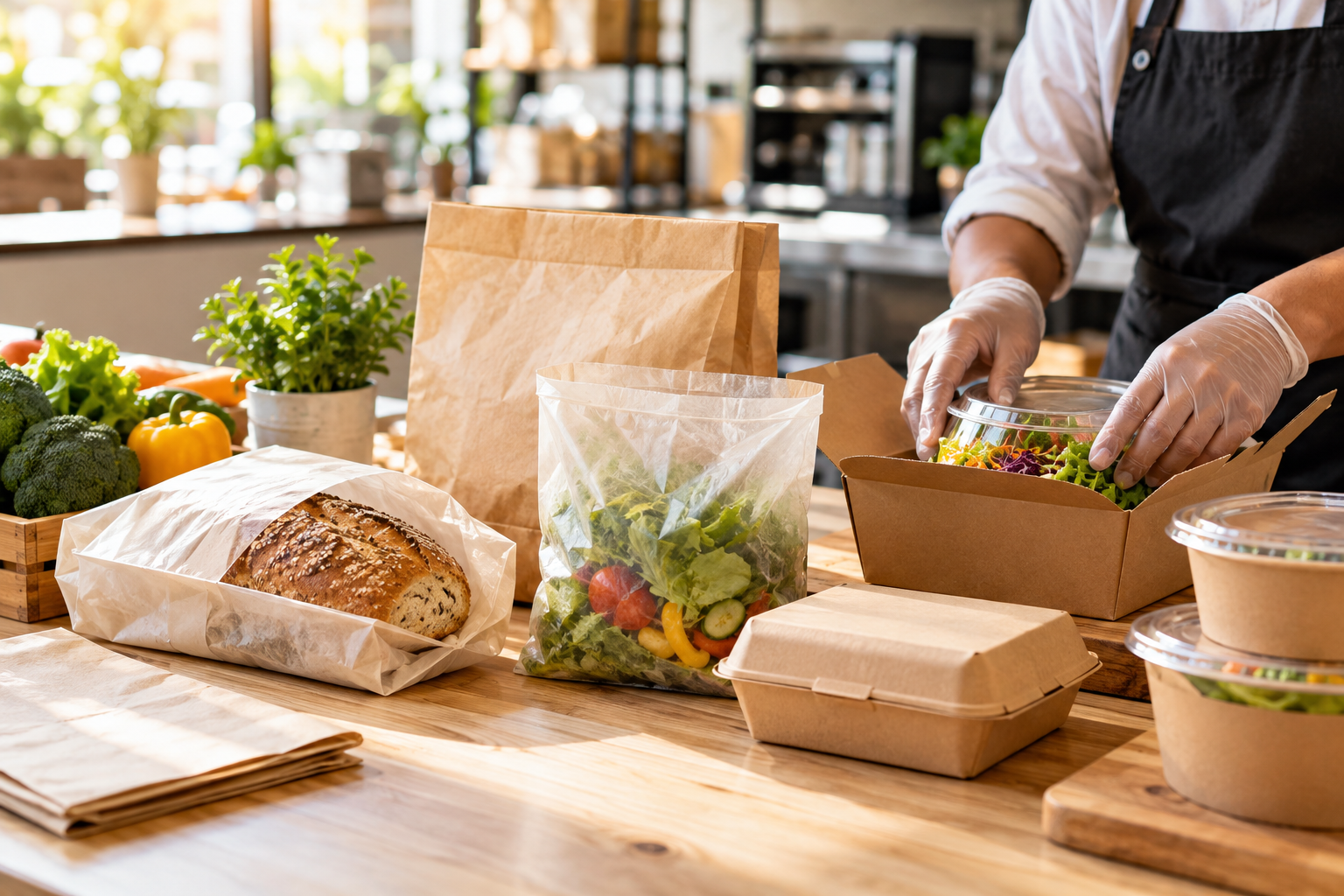
Compostable bags can be developed for specific applications. For example, produce bags can be used for fruits and vegetables, while compostable bread bags can support bakery packaging requirements.
Choosing the correct packaging specification is important because different food products have different storage and handling requirements.
4. Supports Cleaner Packaging Practices
Food businesses use packaging every day. From packaging fresh vegetables to carrying bakery products, these applications can generate a significant amount of packaging waste.
Introducing compostable alternatives where appropriate can be one step toward improving a business’s overall packaging strategy.
Applications of Compostable Food Packaging
Compostable packaging can be useful across multiple industries and businesses.
Some common applications include:
- Grocery stores
- Supermarkets
- Bakeries
- Restaurants
- Cafés
- Cloud kitchens
- Food delivery businesses
- Hotels
- Fresh produce retailers
- Food manufacturers
- Retail stores
For example, a supermarket may use compostable produce bags for fruits and vegetables, while a bakery may use compostable bread bags for packaging bakery products.
The packaging should always be selected according to the product, expected shelf life, handling conditions, and applicable food-contact requirements.
How to Choose the Right Compostable Packaging
Not every packaging product is suitable for every application. Businesses should evaluate several factors before placing an order.
Important considerations include:
Material: Check what material the packaging is made from and whether it meets the intended application.
Size: Select a suitable size according to the product and quantity being packaged.
Strength: Packaging should have adequate strength for handling, storage, and transportation.
Printing: Businesses may consider customized printing to display their brand name, logo, or other required information.
Certifications: Always verify relevant certifications and compliance requirements for the intended use.
Disposal: Understand the conditions required for composting and proper disposal.
Why Choose Biometa Polypack?
Biometa Polypack focuses on sustainable and compostable packaging solutions for different commercial requirements. The company offers customized packaging options based on size, GSM, color, printing, embossing, and other specifications.
This allows businesses to develop packaging that meets their functional requirements while supporting their sustainability objectives.
For food retailers, bakeries, supermarkets, and other businesses, customized compostable packaging can also provide an opportunity to combine product protection with consistent brand presentation.
The Future of Sustainable Food Packaging
The packaging industry is gradually moving toward solutions that consider both performance and environmental impact. As sustainability becomes a stronger consideration for businesses and customers, demand for compostable packaging is expected to continue growing.
However, sustainable packaging is most effective when combined with responsible consumption, appropriate disposal, recycling where applicable, and better waste-management practices.
Conclusion
Compostable food packaging is becoming an important consideration for businesses looking for alternatives to conventional plastic. It can support food packaging requirements while helping companies take a more environmentally responsible approach.
